
· Erin Delaney
How to teach a dog to fetch — and, harder, to let go
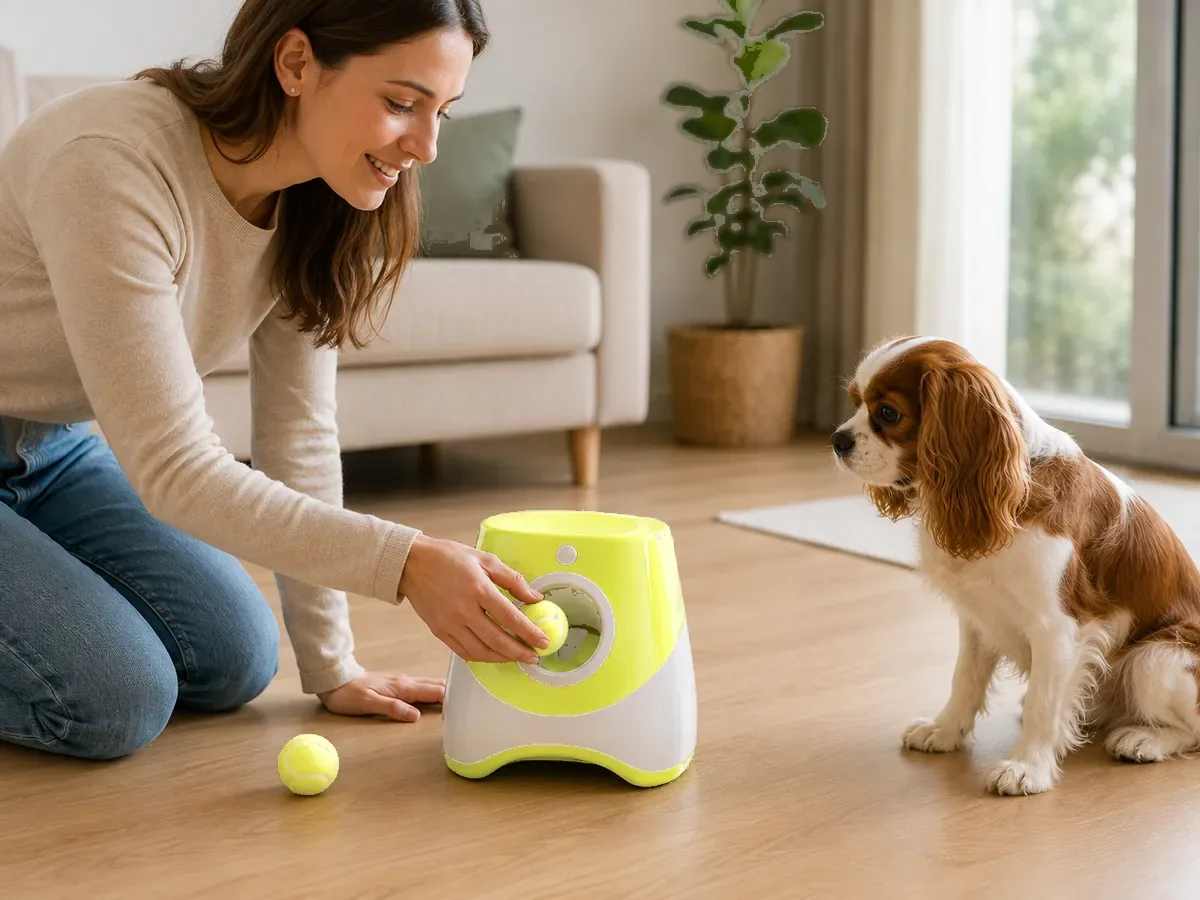
The reason this matters is practical. A dog who chases but keeps the ball turns the game into a chase-the-dog game, which is the opposite of restful. And if you are thinking of an automatic launcher, the release is the whole thing: the machine only works if the dog puts the ball back into it himself.
Step 1 — make the object worth chasing
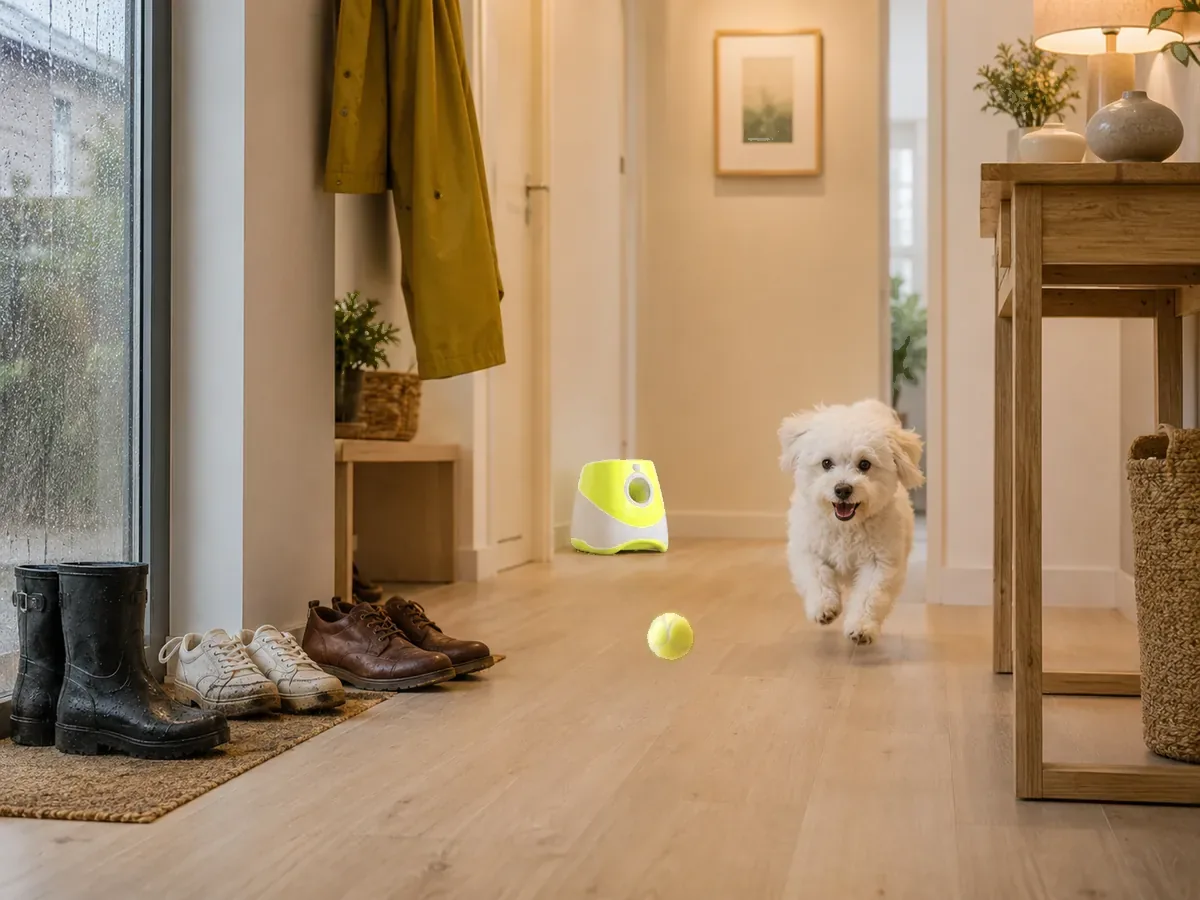
Start indoors, in a corridor or a room with no other toys out. Take one ball and move it along the floor in front of the dog rather than throwing it: rolling triggers the chase instinct far more reliably than an arc through the air, and it stays inside his field of view. The moment he moves toward it, that is the behavior you are after. Nothing else.
Do five or six repetitions and stop while he still wants more. Sessions that end on the dog's terms build appetite; sessions that run until he loses interest teach him that fetch is something that goes on too long.
Step 2 — make coming back the good part
Most dogs pick the ball up and then stand there, or trot off with it. That is not disobedience — nothing has told him what to do next. Crouch down, open your arms and move away from him. A dog follows movement that retreats far more readily than he approaches someone standing still and calling.
When he arrives with the ball, do not reach for it. Praise him for arriving. At this stage arriving is the trick; the ball is incidental.
Step 3 — the release, which is where everyone gets stuck
This is the step that turns fetch into a loop instead of a standoff. A dog holding a ball is doing something completely ordinary: he has caught a thing and he is keeping it. Taking it out of his mouth by hand teaches him that your approach means loss, and he will start backing away as you get near.
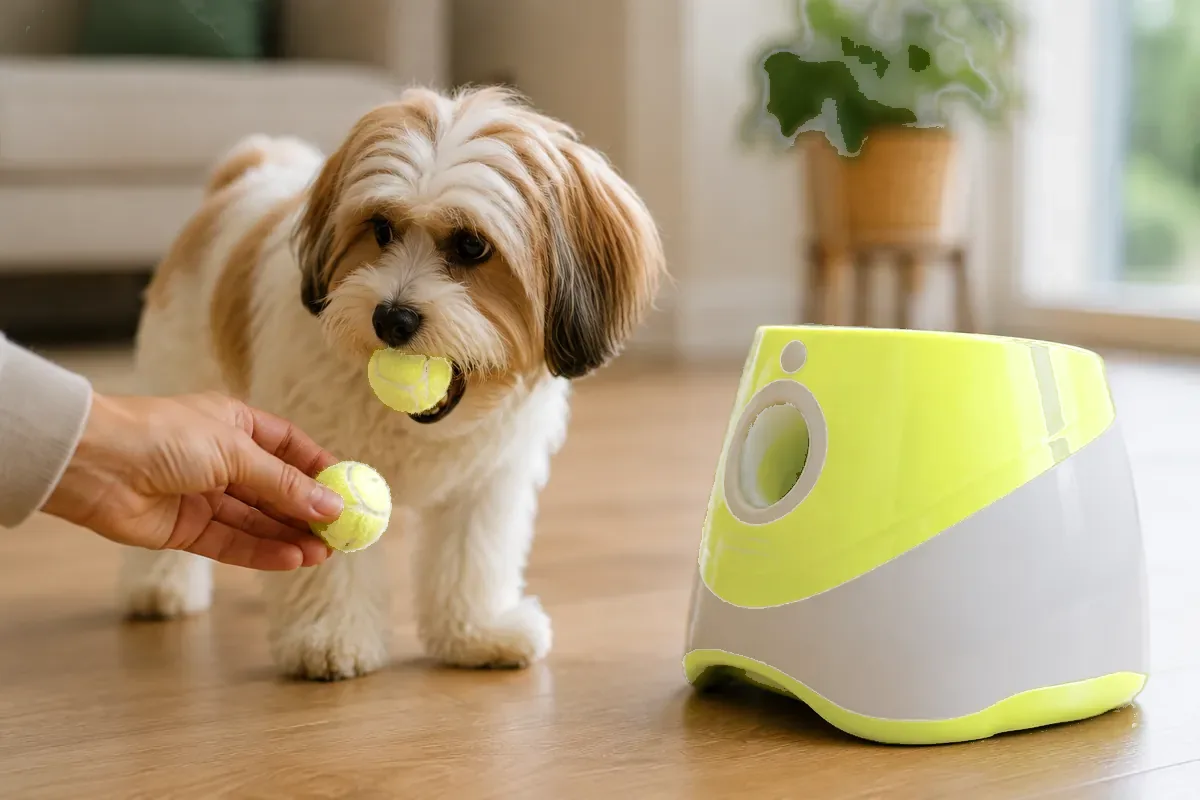
Trade instead of take. Hold a second, identical ball where he can see it. The moment he drops the first one, throw the second. He learns within a handful of repetitions that letting go is what makes the game continue — the opposite of what taking teaches him.
Two identical balls matter more than it sounds. If the second object is more interesting than the first, you are teaching him to swap up, and he will hold out for something better. If it is less interesting, he will not trade at all. This is exactly why an automatic launcher ships with three of the same ball rather than one.
Add the word once the behavior is reliable, not before. Say "drop" as the ball is already leaving his mouth, for a week or so, and only then start saying it slightly earlier. A cue attached to a behavior that does not yet exist just becomes background noise.
Step 4 — put the release somewhere specific
Once he lets go on request, you can teach him where. Hold a shallow container — a bowl, a box lid — and trade only when the ball lands in it. Most dogs generalize from "let go" to "let go here" in two or three sessions, because the trade still happens and only the target has moved.
This is the skill an automatic launcher runs on, and it is why buyers report such different learning times for the same machine. One buyer wrote that his dog worked it out on day one; another, several days. Both are normal, and the difference is almost always how solid the release was before the machine arrived.
What to do when it is not working
- He chases but will not come back. You are probably still standing up and calling. Crouch, retreat, and stop reaching for the ball when he arrives.
- He comes back but guards the ball. Go back to trading, and make absolutely sure the two balls are identical.
- He loses interest after three throws. The sessions are too long. Cut them in half and stop while he is still keen.
- He is frightened of the launcher. Set it to the shortest distance, indoors, and sit next to it. One buyer describes exactly this: at first it frightened my border collie, but he got used to it.
Some dogs never take to it, and that is fine
Retrieving is a strong instinct in some breeds and close to absent in others. A dog who would rather sniff, shred or dig is not failing at fetch; he is telling you what his brain is built for. If four or five short sessions produce nothing, the useful move is to change the game, not to drill harder. Scent work and food puzzles tire out a non-retriever far faster than a ball ever will.

Erin Delaney · Dog trainer, specializing in working off energy
Erin has spent twelve years working with companion dogs in cities, mostly active breeds living in apartments. She writes the Pupserve guides and reads every product page before it goes live.
Reviewed and updated 31 August 2026. See how we test.